Whole-Home Mold Remediation in Irving, TX
The water bill doubled in April and the plumber found a hot-water line leaking under the slab near the kitchen. By the time it was rerouted through the attic, the kitchen toe-kicks, the hall closet, and the back bedroom carpet had all been wet for two months, and none of them share a wall. This site connects you by phone with an independent local provider who does whole-home mold remediation in Irving and across western Dallas County.
A sketch of every wet reading comes first
A slab leak follows the plumbing trench, not the floor plan, so the crew's first job is a map. They meter every exterior and interior wall at the base, read the slab in a grid across every room, and run a thermal camera over the floors to find the warm track the leak left behind. Each wet reading goes on a sketch of the house. Rooms that look fine but read wet go on the map too.
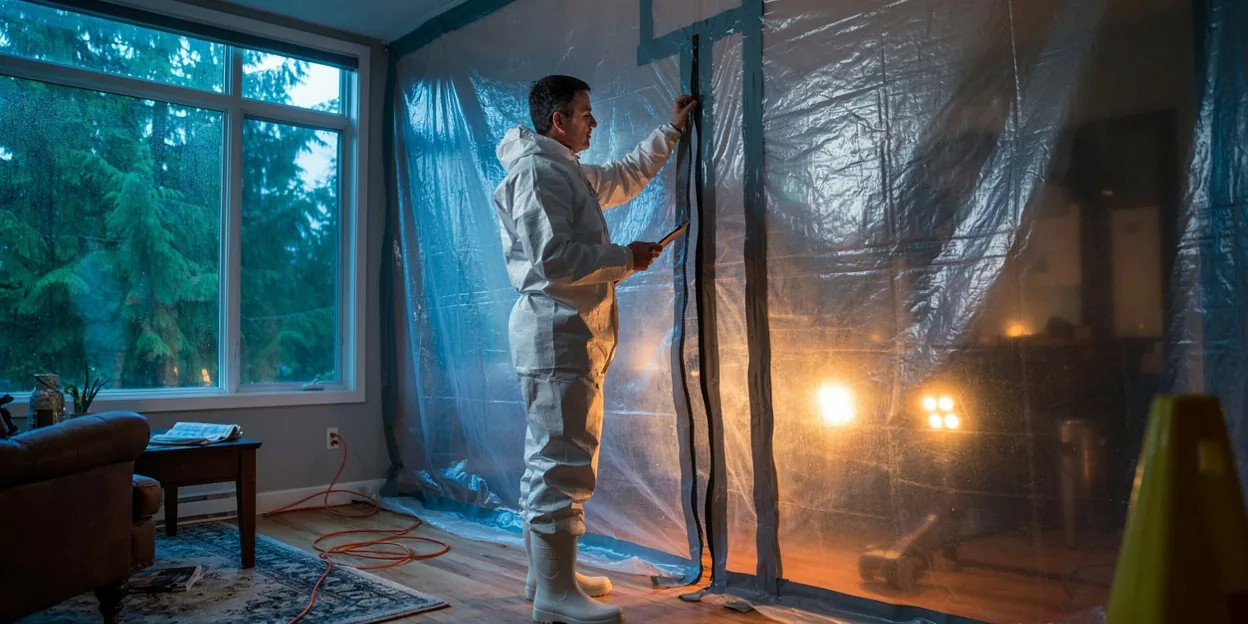
From that map they divide the house into zones and set the order. Each zone gets its own containment and its own scrubber. The HVAC system is shut down and the registers sealed through the whole job, because a running blower would carry dust from one zone into the finished ones.
While the plumber is still there: photos, carpet corners, and sleeping plans
If the leak has not been fixed yet, shut the main and get the plumber back before the mold crew starts; drying a house that is still taking on water is pointless. Photograph every room, including the ones that look dry. Pull up a corner of carpet in each room and photograph the pad.
Decide early whether you can live around three contained zones for a week or more. Most households can, with the kitchen the hardest part. If someone in the house has asthma or a breathing condition that mold sets off, plan their nights elsewhere during demolition and say so on the call.
Kitchen, closet, bedroom: how three zones become one finished house
In each zone the crew removes wet drywall to a set height above the mark, pulls carpet and pad from the wet readings, and takes out cabinet toe-kicks and bottom panels that sat in water. Everything leaves in sealed bags through one route. Framing and slab are HEPA vacuumed and wiped, then air movers and dehumidifiers run until the readings drop. The zone is checked, the plastic comes down, and the crew moves to the next one.
A single wet wall in one room is ordinary mold removal. Wet ductwork or an air handler that pulled the smell through the house is HVAC mold cleaning. A slab leak that also wet the kitchen cabinets and a hall bath pulls in bathroom mold removal. Putting floors, drywall, and cabinets back is mold damage repair, scheduled after the last zone meters dry.
Rerouted lines in the attic and the wet rooms they leave behind
Irving's Blackland clay swells and shrinks with the seasons, and it has been doing that under south Irving slabs since the 1950s. Copper supply lines run under those slabs rub against the concrete each time it moves, and cast iron drains rust from the inside out; both fail where no one can see them. Plumbers in Dallas County commonly abandon the under-slab line and reroute through the attic, which fixes the leak and leaves the mold behind for a different crew.
The February 2021 freeze produced the other kind of whole-house job: an attic supply line split while a family was away, and by the time they returned, water had come through two ceilings and down the walls to the slab. Jobs that size fall squarely under Chapter 1958 of the Occupations Code, which requires a licensed mold remediation contractor, a separate licensed assessor to write the protocol, and a Certificate of Mold Damage Remediation for the owner within ten days of completion. Most Texas policies pay for a sudden break and exclude a slow leak, so the plumber's report and the date on the water bill both matter to your adjuster.
Describing a house with wet rooms that share no wall
Have the address, which rooms read wet or smell musty, when the leak started and when it was fixed, and whether a plumber rerouted the line. Mention anyone in the house with breathing trouble so the provider can plan the zones around them. Call (469) 652-8352.