Attic Mold Remediation in Irving, TX
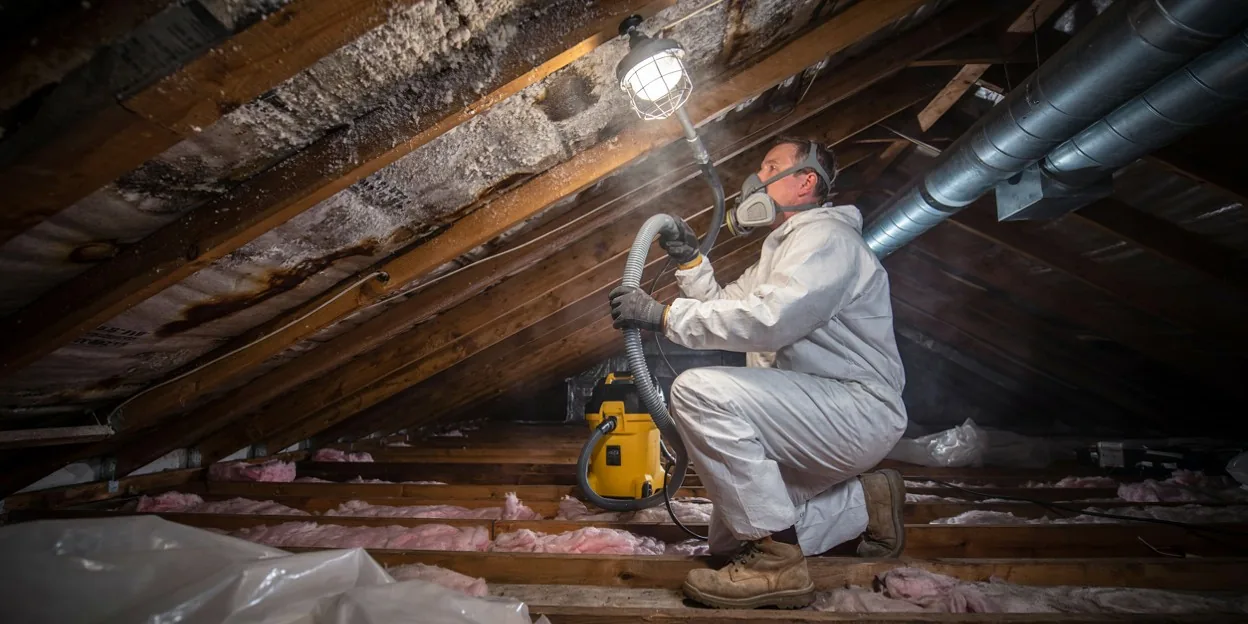
A hailstorm came through Irving in April and the roofer said the shingles were bruised but holding. By July there was a tan ring on the bedroom ceiling, and when you pushed up the attic hatch with a flashlight you saw gray streaks running down the underside of the decking and insulation that was still damp to the touch. This site connects you by phone with an independent local provider who does attic mold remediation in Irving and across western Dallas County.
Streaks on the decking, traced uphill to where the water got in
The crew goes up with a meter and a light and reads the decking, the rafters or trusses, and the top of the insulation under the stain. They trace the streaks uphill to the entry point, which under an asphalt shingle roof is usually a hail-cracked shingle, a nail pop, a pipe boot that has split in the sun, or a valley where the flashing lifted.
Then they check the attic's other water source: a flex duct or an air handler sweating in an attic that hits 130 degrees by noon. A duct dripping on the insulation leaves a wet patch with no stain on the decking above it, and the crew tells you which of the two you have before anything is cleaned.
Ask the roofer about cracked mats, not missing shingles
Leave the wet insulation in place. Of everything in the attic it holds the most growth, and hauling it down the hatch and through the hallway with no plastic up seeds every room you pass. Photograph the ceiling stain and, if you can do it safely from the hatch, the decking above it.
Call the roofer back and ask them to look for cracked mats and lifted flashing, not just missing shingles; remediation under a roof that still leaks is a job that repeats in the fall. If a bathroom fan vents into the attic, stop using that fan until the crew has been up.
Sanded decking, new insulation, and a hatch sealed while it happens
The attic hatch is sealed with plastic and a HEPA scrubber runs in the attic so dust stays out of the rooms below. Wet insulation under the stained area goes into bags and out through one route. The decking and framing are HEPA vacuumed, cleaned, and where the growth has gone into the grain, sanded or media-blasted, then treated. Decking that has delaminated is replaced from the roof side, which is the roofer's job.
New insulation goes in once the wood meters dry. A ceiling that stayed wet long enough to sag or stain comes out from below; that is mold removal in the room. If the water came from a sweating duct or the air handler itself, the job is HVAC mold cleaning. Hanging new ceiling drywall and matching the texture falls under mold damage repair.
April hail, the October 2019 tornado, and roofs tarped too long
Irving sits in the part of North Texas where hail arrives most springs, and a storm that leaves shingles looking whole from the street can crack the mat underneath so that water seeps onto the decking all summer. On October 20, 2019, an EF3 tornado touched down just north of the Trinity River in northwest Dallas, a few miles east of Irving, and roofs across North Dallas and Richardson were tarped for months; attics under late repairs grew mold before the shingles went back on.
The February 2021 freeze added a different attic problem: supply lines in Irving attics split by the thousand, and water ran down onto insulation and ceilings for days before the thaw let anyone find them. An attic job over 25 contiguous square feet, which a stained section of decking reaches fast, falls under Chapter 1958 of the Occupations Code and must be done by a licensed Texas mold remediation contractor, with a Certificate of Mold Damage Remediation for the owner at the end. Most Texas policies pay for storm damage and the mold that follows quickly after it, and exclude growth from a leak that went unrepaired, so date your photos.
Reporting a ceiling ring and streaked decking by phone
Have the address, where the stain is, when the hail or the freeze happened, and whether the roofer has already repaired the roof. Say whether you saw wet insulation or streaked decking from the hatch. Call (469) 652-8352.