Bathroom Mold Removal in Irving, TX
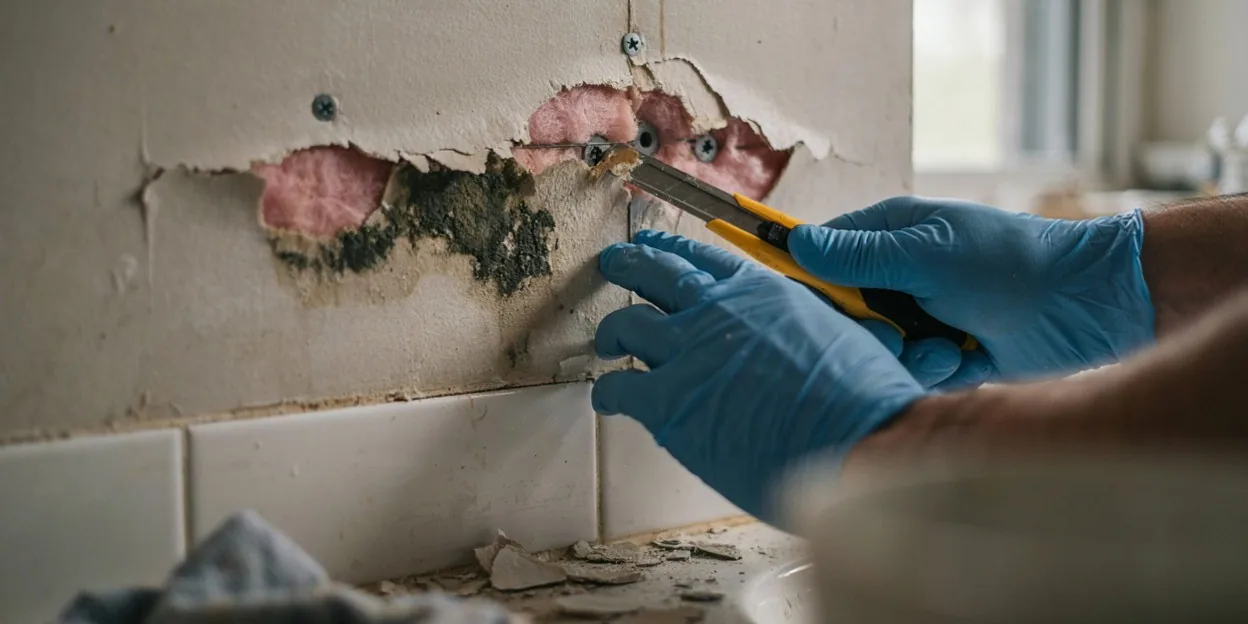
The hall bath in your 1972 ranch off Rochelle Road has a line of dark grout along the tub that comes back a month after you scrub it, the particleboard floor of the vanity cabinet has gone soft, and the ceiling over the shower spots no matter how often you paint. The fan rattles but moves almost no air. This site connects you by phone with an independent local provider who does bathroom mold removal in Irving and across western Dallas County.
Four ways a bathroom stays wet, sorted before any tile moves
A bathroom has four ways to stay wet, and the crew sorts them out before removing anything. They meter the wall behind the tub spout and the valve, the floor at the toilet flange, the wall behind the vanity, and the ceiling around the fan housing. A tub surround that reads wet behind the tile usually means a failed spout seal or a cracked grout joint that has let shower water run down the backer for years.
Then they look at the fan. They hold a tissue to the grille with the fan running and check the attic for where the duct goes, because a fan ducted into the attic instead of through the roof dumps steam onto the insulation and the back of the ceiling drywall. The crew marks the wet area and puts plastic over the bathroom door before any cut.
Use the other bathroom and empty the vanity
Use another bathroom for a few days if you have one. Open the vanity doors, pull everything out of the cabinet, and photograph the floor and the back panel. Shut off the stops under the sink if the cabinet floor is wet and you can see a drip at the trap or the supply.
Leave the grout and the caulk alone; recaulking over a wet backer hides the problem for a season. Do not pull the vanity yourself, because the wall behind it is where the growth usually is and tearing wet drywall without containment spreads it. Run the fan if it works, and keep the door shut otherwise.
The plumber's fix comes before the vanity comes out
A plumber fixes the leak before the mold crew closes anything: a spout seal, a valve, a toilet flange and wax ring, or a vanity supply. Then the crew removes what stayed wet. A particleboard vanity floor and back panel come out and go in bags; the drywall behind the vanity is cut to the moisture mark. Tile and backer board on a wet tub wall come off to the framing, which is HEPA vacuumed, cleaned, and dried.
A ceiling under a fan that vents into the attic is cut to the reading, the fan is rerouted through the roof or a gable by the appropriate trade, and the insulation above goes out if it reads wet. Growth that followed the fan duct onto the roof decking becomes attic mold remediation. A tub drain that leaked under the slab and wet the hallway beyond the bathroom is mold removal in that hall. New tile, backer, drywall, and vanity are mold damage repair.
A 1960s hall bath and a 1990s garden tub leak in different places
South Irving's 1950s and 1960s houses were built with one or two small hall baths, a tub with a tiled surround set on mortar, and a cast iron drain under the slab. Fifty years later the surround grout has opened, the drain has rusted, and many of those baths were refitted with a particleboard vanity that soaks up water like a sponge. North of 183, the 1980s and 1990s houses in Las Colinas, Hackberry Creek, and Valley Ranch have large master baths with a garden tub, a separate shower with a pan that can crack, and a fan that was often ducted into the attic instead of outside.
Dallas County summers push outdoor dew points into the 70s, and a bathroom that never dries between showers grows surface mold on grout and caulk even with no leak at all. That surface growth is a cleaning job; the soft cabinet floor and the spotting ceiling are not. Growth past 25 contiguous square feet, which a wet tub wall can reach quickly, must be handled by a licensed Texas mold remediation contractor under Chapter 1958 of the Occupations Code.
What to say about a bathroom that spots again after every repaint
Have the address, which bathroom, what is soft or stained, and whether the fan vents outside or into the attic as far as you know. Say whether a plumber has already looked at the spout, the flange, or the shower pan. Call (469) 652-8352.