Mold Removal in Lamar Brown, TX
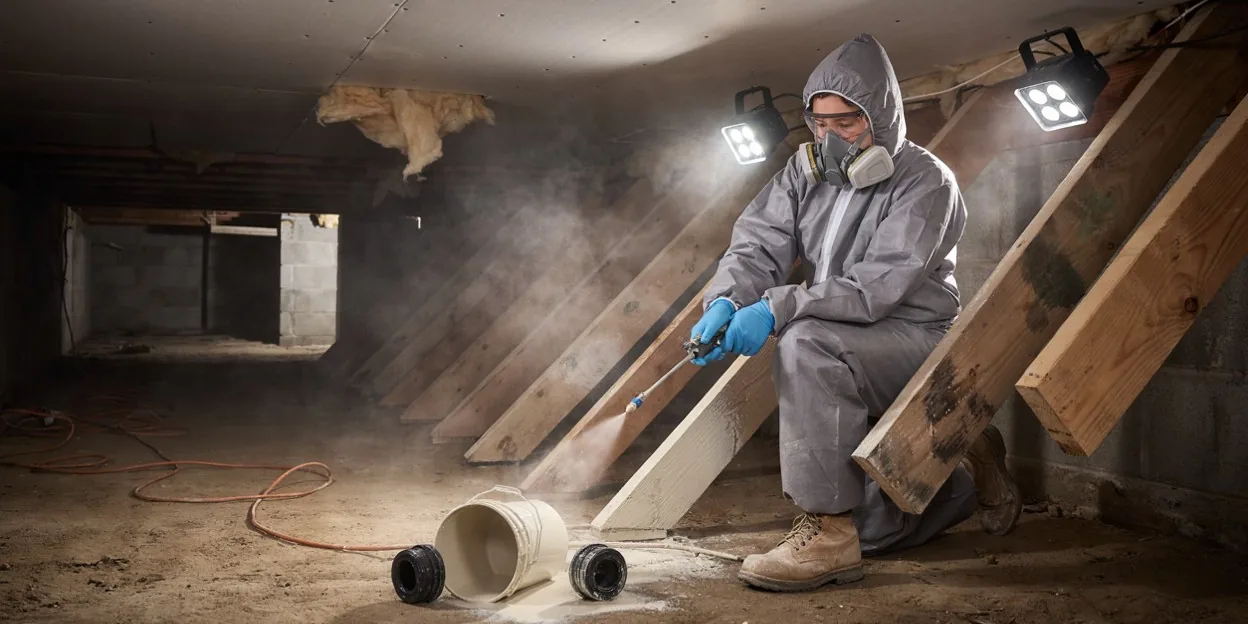
Lamar Brown is a south Irving neighborhood in the 75060 ZIP code, named for Lamar Middle School and Brown Elementary, which serve it, and built in the 1950s and 1960s when the city was growing south from Irving Boulevard toward Shady Grove Road. The houses are small single-story brick and frame ranches on thin slabs, with copper supply lines and cast iron drains under the concrete, a single hall bath, and a water heater in a hall closet or a carport utility room.
These are the oldest slabs in the city, and seventy years of Blackland clay movement has worked on them and the pipes beneath them. A hot-water line pinholes under the hallway and the tile warms. A cast iron drain rusts through under the kitchen and the cabinet toe-kicks swell. The tub surround grout opens and shower water soaks the backer for years. Many of these houses were remodeled on a budget in the 1980s and 1990s with particleboard vanities and laminate floors over the slab, both of which hold water.
Lamar Brown homeowners who call this number reach one independent local provider for mold removal and remediation in south Irving. That company reads the slab and the walls with a meter and writes the scope; our part ends when the call connects.
Lamar Brown mold removal in a 1957 ranch
A warm floor and a soft baseboard are mold removal. A musty smell under a laminate floor laid straight on the slab is mold odor removal. Replacing drywall, trim, and cabinet bottoms after the plumber reroutes the line is mold damage repair.
Old slabs, rerouted lines, and a permit from the city
Plumbers in south Irving usually abandon a failed under-slab line and reroute it overhead, which fixes the leak and leaves the mold for a different crew. A rebuild that moves plumbing or electrical is permitted through the City of Irving, and the provider handles that filing.
Call (469) 652-8352 and describe the floor, the smell, or the bath. We put you through to an independent local mold provider serving Lamar Brown.
Services Available in Lamar Brown
Mold Removal
Growth on drywall after a slab leak, a water heater, or a washer line: room sealed, wet board cut to the meter mark, framing HEPA-cleaned and dried.
Black Mold Removal
A dark patch handled by how far the water traveled, not by its color: containment, porous material out, hard surfaces cleaned, leak fixed first.
Whole-Home Mold Remediation
A slab leak or a burst pipe that ran through several rooms, mapped wall by wall and cleared in zones as one planned project.
HVAC Mold Cleaning
Coil, drain pan, and condensate line cleaned or replaced when the attic air handler sweats through a 100-degree August.
Bathroom Mold Removal
Growth behind a vanity, under a shower pan, or on a ceiling with no fan, removed after the supply or drain leak is fixed.
Attic Mold Remediation
Growth on roof decking under hail-cracked shingles or around a sweating duct, cleaned and treated once the roof and insulation are handled.
Mold Odor Removal
A musty smell in a house that looks fine, traced to the wet pad under the floor or the cabinet back, then removed and treated.
Mold Damage Repair
Drywall, texture, baseboard, and cabinet bottoms put back after removal, once the slab reads dry and the leak is repaired.