Mold Removal in Heritage District, TX
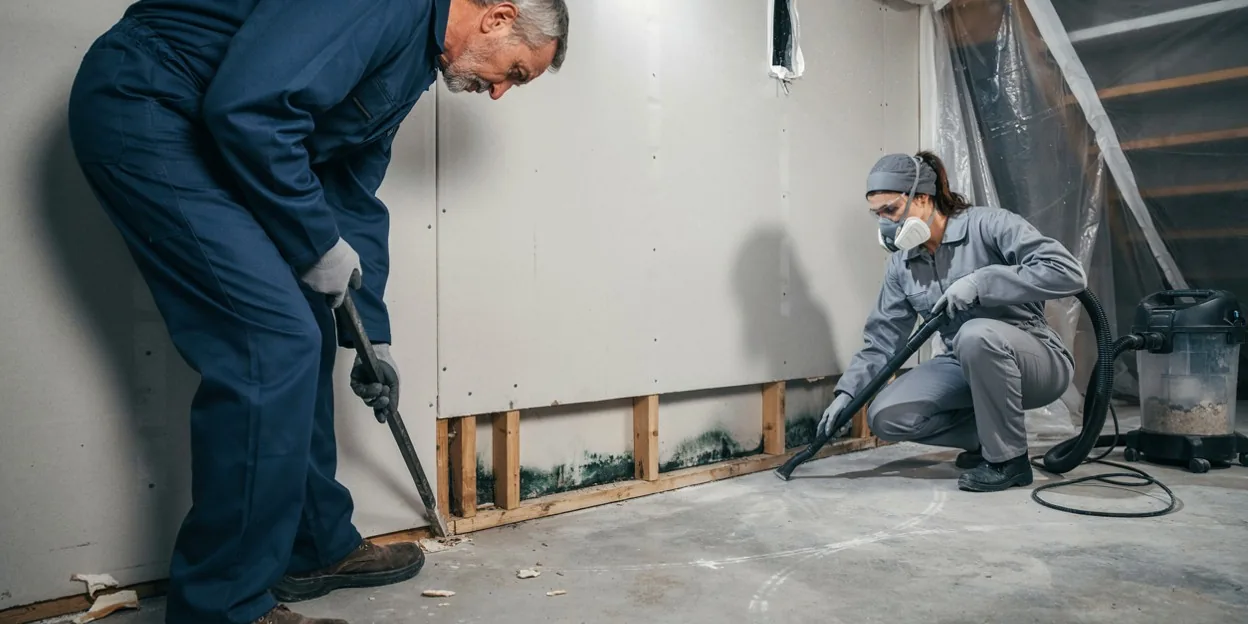
The Heritage District is Irving's original townsite, the blocks around Main Street and Irving Boulevard that Schulze and Brown platted beside the Rock Island tracks in 1903. Heritage Park and the Heritage House sit here, and the houses on the surrounding streets are the oldest in the city: 1920s and 1930s frame cottages on pier-and-beam, 1940s brick, and 1950s slab ranches filling the gaps.
That mix means a mold call downtown can go two ways. A pier-and-beam cottage grows mold on the underside of its subfloor after a wet spring leaves the crawl space damp, and the smell comes up through the floor. A 1950s slab ranch has the usual south Irving problem: a copper or cast iron line under the concrete that failed after seventy years of clay movement. Either way the bathroom was probably added or remodeled decades ago against an exterior wall with no fan.
Heritage District homeowners who call this number reach one independent local provider for mold removal and remediation in downtown Irving. That company gets under the floor or onto the slab with a meter and writes the scope; the work is theirs.
Mold removal around Main Street, above a crawl space or on a slab
A musty smell in a 1930s cottage with no stain anywhere is mold odor removal, and the crew starts under the house. A dark patch in a bathroom with no fan is black mold removal. Replacing old plaster or drywall and matching the trim is mold damage repair.
The society that keeps the 1912 house standing
The Irving Heritage Society, founded in 1978, maintains the Heritage House and Heritage Park a few blocks from the old depot site. Work on a house inside a historic overlay can need an extra review, so tell the provider the address before the rebuild is scheduled.
Call (469) 652-8352 and tell us how old the house is and where it smells. We put you through to an independent local mold provider serving the Heritage District.
Services Available in Heritage District
Mold Removal
Growth on drywall after a slab leak, a water heater, or a washer line: room sealed, wet board cut to the meter mark, framing HEPA-cleaned and dried.
Black Mold Removal
A dark patch handled by how far the water traveled, not by its color: containment, porous material out, hard surfaces cleaned, leak fixed first.
Whole-Home Mold Remediation
A slab leak or a burst pipe that ran through several rooms, mapped wall by wall and cleared in zones as one planned project.
HVAC Mold Cleaning
Coil, drain pan, and condensate line cleaned or replaced when the attic air handler sweats through a 100-degree August.
Bathroom Mold Removal
Growth behind a vanity, under a shower pan, or on a ceiling with no fan, removed after the supply or drain leak is fixed.
Attic Mold Remediation
Growth on roof decking under hail-cracked shingles or around a sweating duct, cleaned and treated once the roof and insulation are handled.
Mold Odor Removal
A musty smell in a house that looks fine, traced to the wet pad under the floor or the cabinet back, then removed and treated.
Mold Damage Repair
Drywall, texture, baseboard, and cabinet bottoms put back after removal, once the slab reads dry and the leak is repaired.