Mold Removal in Hackberry Creek, TX
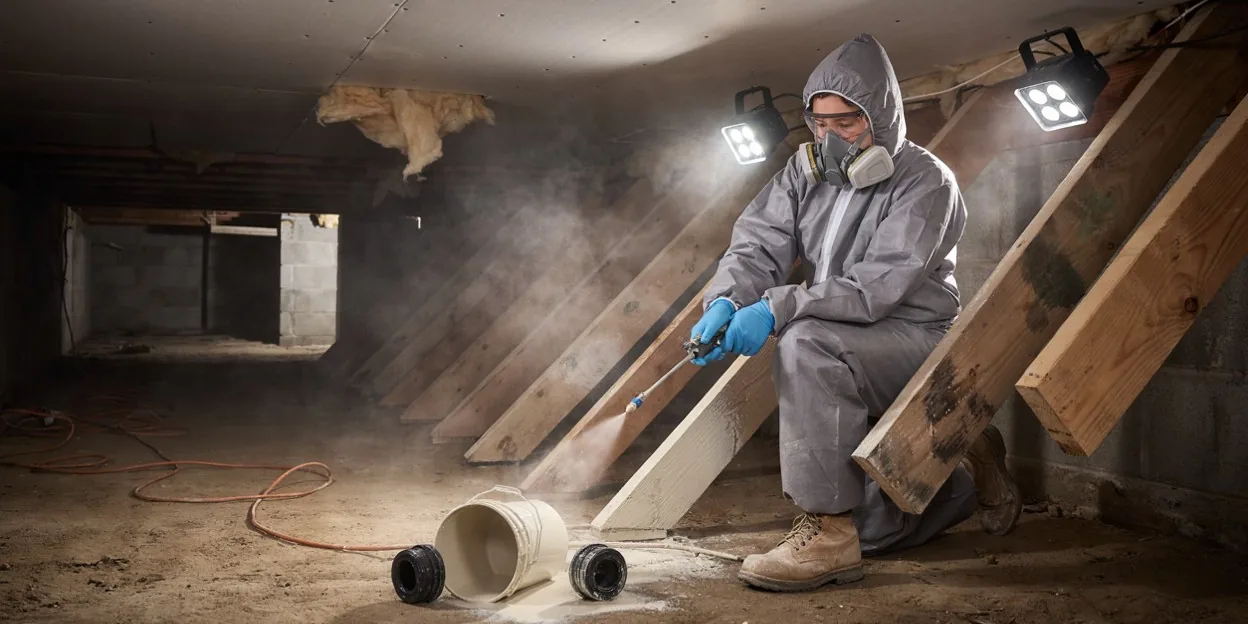
Hackberry Creek is a gated community in north Irving along Royal Lane and Highway 114, laid out around a golf course that Byron Nelson designed and named for the creek that drains this part of the old Carpenter ranch into the Elm Fork. The houses are 1980s and 1990s custom and semi-custom brick, most of them two-story, on post-tension slabs with attic air handlers, large master baths, and three-car garages holding the water heater.
Big houses have more places for water to go wrong. Two or three attic units mean two or three condensate pans that can overflow in a July heat wave. A garden tub, a separate shower, and a second-floor laundry put plumbing above finished ceilings. The February 2021 freeze split attic supply lines throughout the community, and a patched ceiling with damp insulation above it is still a common find.
Hackberry Creek homeowners who call this number reach one independent local provider for mold removal and remediation in north Irving. That company meters the house and sets the scope; we only connect the call.
Hackberry Creek mold removal under a second-floor laundry
A ceiling under an upstairs washer or attic unit is HVAC mold cleaning when the pan is the cause and mold removal when the hose is. Growth under a cracked shower pan is bathroom mold removal. Replacing the ceiling and matching the texture is mold damage repair.
The course the gates were built around
Hackberry Creek Country Club on West Royal Lane anchors the community with its Byron Nelson course and tennis complex, and the homeowners association reviews exterior work, so mention early if a rebuild changes anything on the outside.
Call (469) 652-8352 and describe which ceiling or wall is wet. We put you through to an independent local mold provider serving Hackberry Creek.
Services Available in Hackberry Creek
Mold Removal
Growth on drywall after a slab leak, a water heater, or a washer line: room sealed, wet board cut to the meter mark, framing HEPA-cleaned and dried.
Black Mold Removal
A dark patch handled by how far the water traveled, not by its color: containment, porous material out, hard surfaces cleaned, leak fixed first.
Whole-Home Mold Remediation
A slab leak or a burst pipe that ran through several rooms, mapped wall by wall and cleared in zones as one planned project.
HVAC Mold Cleaning
Coil, drain pan, and condensate line cleaned or replaced when the attic air handler sweats through a 100-degree August.
Bathroom Mold Removal
Growth behind a vanity, under a shower pan, or on a ceiling with no fan, removed after the supply or drain leak is fixed.
Attic Mold Remediation
Growth on roof decking under hail-cracked shingles or around a sweating duct, cleaned and treated once the roof and insulation are handled.
Mold Odor Removal
A musty smell in a house that looks fine, traced to the wet pad under the floor or the cabinet back, then removed and treated.
Mold Damage Repair
Drywall, texture, baseboard, and cabinet bottoms put back after removal, once the slab reads dry and the leak is repaired.