Mold Removal in Flower Mound, TX
Flower Mound sits northwest of Irving in Denton County, on the north shore of Grapevine Lake, named for a twelve-acre prairie mound that still blooms each spring. The town stayed small until the 1980s, then grew fast into large-lot two-stories on post-tension slabs, most built between 1985 and 2010, with attic air handlers, garden tubs, and three-car garages holding the water heater.
Those houses are now in the years when things fail. The attic unit that has run sixteen hours a day every summer since 1995 overflows its pan. The shower pan cracks. The water heater weeps into the garage wall. The February 2021 freeze split attic supply lines across the town, and many were patched before the insulation underneath had dried. In a sealed, cooled house, the wet material grows.
Flower Mound homeowners who call this number reach one independent local provider who handles mold removal and remediation here. That company reads the house with a meter and explains what comes out; we only make the connection.
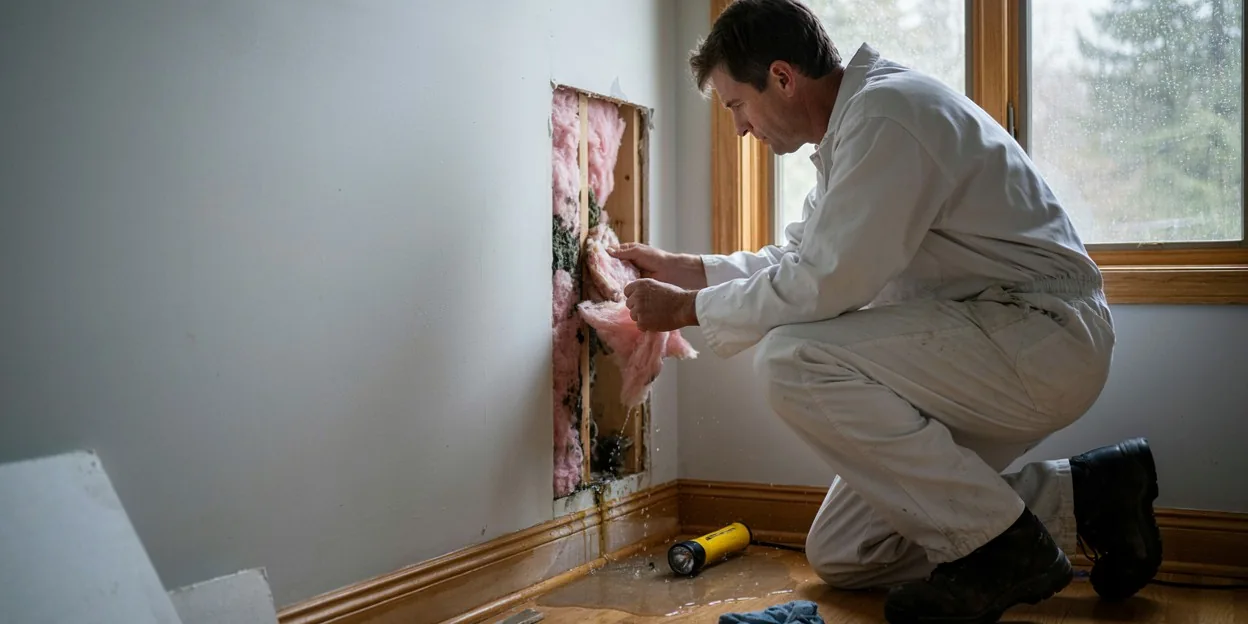
Flower Mound mold removal in a 1996 two-story
A stained hallway ceiling under the attic unit is HVAC mold cleaning. Growth behind a vanity or under a cracked shower pan is bathroom mold removal. Putting drywall, texture, and trim back after the leak is fixed is mold damage repair.
A town built around a hill
Rebuilding that moves plumbing or electrical inside the town goes through the Town of Flower Mound, and the provider pulls that permit. The mound itself sits near the intersection of FM 3040 and FM 2499, protected and unbuilt.
Call (469) 652-8352 and tell us what let the water in. We put you through to an independent local mold provider serving Flower Mound.
Services Available in Flower Mound
Mold Removal
Growth on drywall after a slab leak, a water heater, or a washer line: room sealed, wet board cut to the meter mark, framing HEPA-cleaned and dried.
Black Mold Removal
A dark patch handled by how far the water traveled, not by its color: containment, porous material out, hard surfaces cleaned, leak fixed first.
Whole-Home Mold Remediation
A slab leak or a burst pipe that ran through several rooms, mapped wall by wall and cleared in zones as one planned project.
HVAC Mold Cleaning
Coil, drain pan, and condensate line cleaned or replaced when the attic air handler sweats through a 100-degree August.
Bathroom Mold Removal
Growth behind a vanity, under a shower pan, or on a ceiling with no fan, removed after the supply or drain leak is fixed.
Attic Mold Remediation
Growth on roof decking under hail-cracked shingles or around a sweating duct, cleaned and treated once the roof and insulation are handled.
Mold Odor Removal
A musty smell in a house that looks fine, traced to the wet pad under the floor or the cabinet back, then removed and treated.
Mold Damage Repair
Drywall, texture, baseboard, and cabinet bottoms put back after removal, once the slab reads dry and the leak is repaired.